


How does an ONU achieve dynamic allocation of user-level bandwidth and precise execution of QoS policies?
Release Time : 2026-01-30
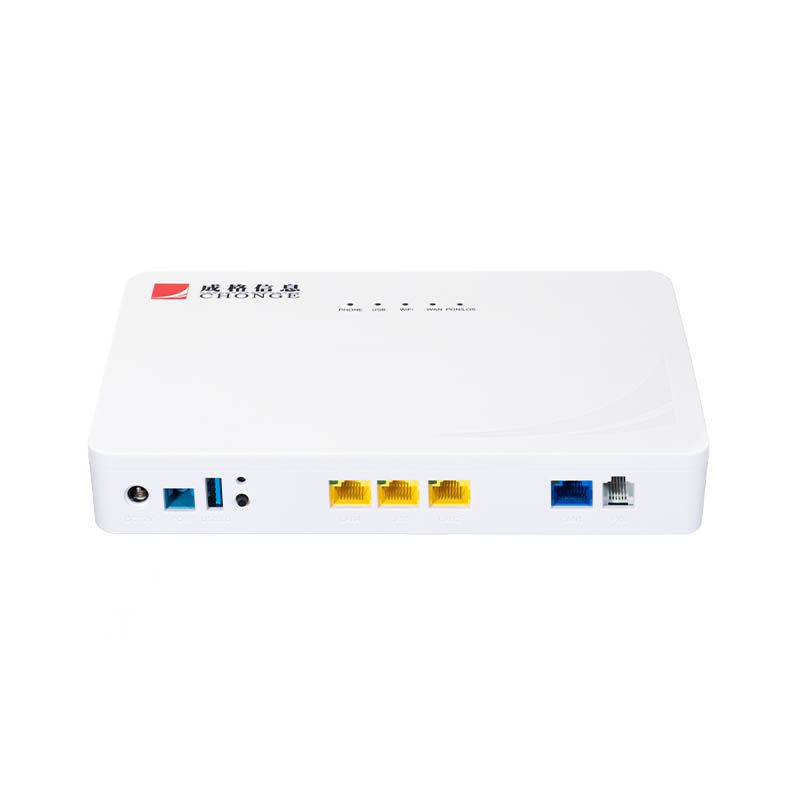
In a passive optical network (PON) architecture, the Optical Network Unit (ONU), as a key access device connecting end users and optical line terminals, not only undertakes high-speed data transmission but also plays a crucial role in dynamic allocation of user-level bandwidth and QoS. Especially in high-density, multi-service concurrent scenarios such as universities and enterprise parks, ensuring smooth video conferencing for every user, uninterrupted online teaching, and low-latency response for IoT devices, while preventing individual users from consuming excessive bandwidth and affecting the overall experience, is precisely where the ONU's intelligent traffic scheduling capability shines.
1. DBA Mechanism: Achieving Dynamic and Fair Allocation of Uplink Bandwidth
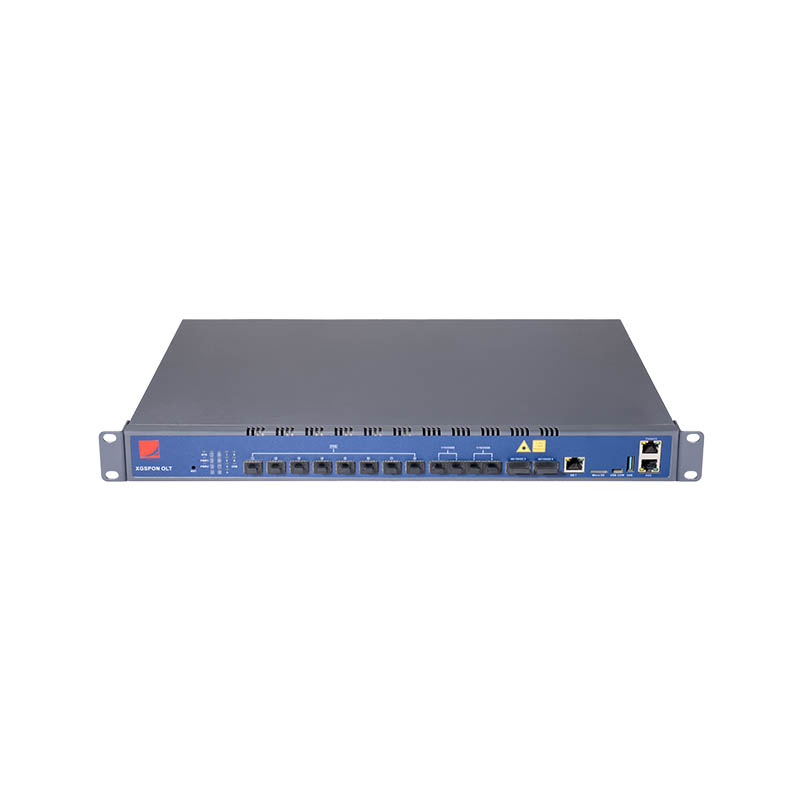
PON networks use time-division multiplexing to share uplink bandwidth. All ONUs must send data within the time window authorized by the OLT. Traditional static bandwidth allocation easily leads to resource waste or congestion, while modern ONUs generally support dynamic bandwidth allocation. DBA has two modes: status reporting and non-status reporting. In SR-DBA, the ONU reports the buffer status of each service queue to the OLT in real time. Based on this, the OLT dynamically adjusts the uplink authorized bandwidth of each ONU according to priority and demand. For example, when a user initiates a 4K video upload, the ONU immediately reports a backlog in the high-priority queue. The OLT can allocate additional bandwidth to the user within milliseconds, while other low-priority services are appropriately slowed down, achieving "on-demand supply and intelligent scheduling."
2. Multi-Service Classification and Priority Mapping: The Foundation for QoS Policy Implementation
The ONU integrates a high-performance traffic processor, supporting deep identification and classification of inbound traffic based on 802.1p, DSCP, VLAN ID, port number, and even application characteristics. Each type of service is mapped to a different service level or traffic shaper. For example, VoIP voice packets are marked as EF and allocated to the highest priority queue, ensuring end-to-end latency <150ms; video streams are marked as AF4x and enjoy guaranteed bandwidth; ordinary web browsing is assigned to the BE queue. This fine-grained classification allows the ONU to perform preliminary QoS processing locally, reducing the burden on the OLT.
3. Collaboration with Broadband Access Gateways: Achieving End-to-End Policy Unification
The ONU does not operate in isolation but collaborates deeply with the upper-layer broadband access gateway. After user authentication, the gateway sends policies including bandwidth limits, QoS templates, and ACL rules to the ONU. For example, a student account might be limited to 100Mbps download and 20Mbps upload, and P2P applications might be prohibited; while a teacher account might enjoy gigabit symmetrical bandwidth and priority channels for video conferencing. The ONU strictly enforces rate limiting and traffic shaping according to the policies, ensuring that even when users use high-bandwidth applications, they will not exceed the allocation threshold, guaranteeing network fairness.
4. Hardware Acceleration and Low-Latency Forwarding: Ensuring Real-Time Service Experience
To avoid latency introduced by software processing, high-end ONUs use dedicated ASICs or NP chips for hardware-level QoS processing. Data packets are classified, marked, and queued before entering the switching engine, with forwarding latency controlled within 10 microseconds. Simultaneously, low-latency queuing technology is supported, placing sensitive services such as voice and games in strictly priority queues, ensuring priority dequeueing even during network congestion, eliminating jitter and packet loss.
5. Intelligent Operation and Maintenance & Visualization: Manageable and Controllable Policy Effects
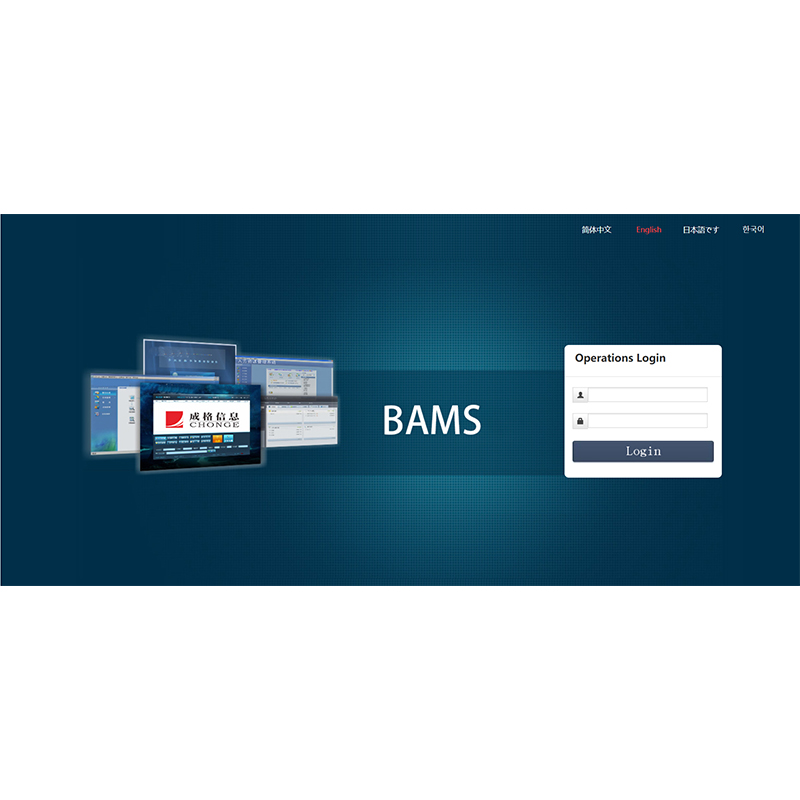
Through TR-069, SNMP, or NETCONF protocols, the ONU can report real-time bandwidth usage, packet loss rate, latency, and other metrics for each user and service to the intelligent network management system. Administrators can intuitively view "who is consuming bandwidth" and "whether QoS policies are effective," and remotely adjust policies. For example, if an abnormal surge in traffic is detected in a dormitory, rate limiting or isolation can be implemented immediately, achieving dual protection of security and performance.
The ONU has long transcended the role of a "photoelectric signal converter," evolving into an edge node with intelligent traffic management capabilities. With DBA as its backbone, QoS as its nervous system, and policy collaboration as its link, it weaves a personalized network experience tailored to each individual user on a single optical fiber. It is this "precise to the user, dynamic on-demand" bandwidth management capability that truly makes Passive Optical Local Area Networks (POLs) an efficient, fair, and reliable foundation supporting smart campuses and digital enterprises.
1. DBA Mechanism: Achieving Dynamic and Fair Allocation of Uplink Bandwidth
PON networks use time-division multiplexing to share uplink bandwidth. All ONUs must send data within the time window authorized by the OLT. Traditional static bandwidth allocation easily leads to resource waste or congestion, while modern ONUs generally support dynamic bandwidth allocation. DBA has two modes: status reporting and non-status reporting. In SR-DBA, the ONU reports the buffer status of each service queue to the OLT in real time. Based on this, the OLT dynamically adjusts the uplink authorized bandwidth of each ONU according to priority and demand. For example, when a user initiates a 4K video upload, the ONU immediately reports a backlog in the high-priority queue. The OLT can allocate additional bandwidth to the user within milliseconds, while other low-priority services are appropriately slowed down, achieving "on-demand supply and intelligent scheduling."
2. Multi-Service Classification and Priority Mapping: The Foundation for QoS Policy Implementation
The ONU integrates a high-performance traffic processor, supporting deep identification and classification of inbound traffic based on 802.1p, DSCP, VLAN ID, port number, and even application characteristics. Each type of service is mapped to a different service level or traffic shaper. For example, VoIP voice packets are marked as EF and allocated to the highest priority queue, ensuring end-to-end latency <150ms; video streams are marked as AF4x and enjoy guaranteed bandwidth; ordinary web browsing is assigned to the BE queue. This fine-grained classification allows the ONU to perform preliminary QoS processing locally, reducing the burden on the OLT.
3. Collaboration with Broadband Access Gateways: Achieving End-to-End Policy Unification
The ONU does not operate in isolation but collaborates deeply with the upper-layer broadband access gateway. After user authentication, the gateway sends policies including bandwidth limits, QoS templates, and ACL rules to the ONU. For example, a student account might be limited to 100Mbps download and 20Mbps upload, and P2P applications might be prohibited; while a teacher account might enjoy gigabit symmetrical bandwidth and priority channels for video conferencing. The ONU strictly enforces rate limiting and traffic shaping according to the policies, ensuring that even when users use high-bandwidth applications, they will not exceed the allocation threshold, guaranteeing network fairness.
4. Hardware Acceleration and Low-Latency Forwarding: Ensuring Real-Time Service Experience
To avoid latency introduced by software processing, high-end ONUs use dedicated ASICs or NP chips for hardware-level QoS processing. Data packets are classified, marked, and queued before entering the switching engine, with forwarding latency controlled within 10 microseconds. Simultaneously, low-latency queuing technology is supported, placing sensitive services such as voice and games in strictly priority queues, ensuring priority dequeueing even during network congestion, eliminating jitter and packet loss.
5. Intelligent Operation and Maintenance & Visualization: Manageable and Controllable Policy Effects
Through TR-069, SNMP, or NETCONF protocols, the ONU can report real-time bandwidth usage, packet loss rate, latency, and other metrics for each user and service to the intelligent network management system. Administrators can intuitively view "who is consuming bandwidth" and "whether QoS policies are effective," and remotely adjust policies. For example, if an abnormal surge in traffic is detected in a dormitory, rate limiting or isolation can be implemented immediately, achieving dual protection of security and performance.
The ONU has long transcended the role of a "photoelectric signal converter," evolving into an edge node with intelligent traffic management capabilities. With DBA as its backbone, QoS as its nervous system, and policy collaboration as its link, it weaves a personalized network experience tailored to each individual user on a single optical fiber. It is this "precise to the user, dynamic on-demand" bandwidth management capability that truly makes Passive Optical Local Area Networks (POLs) an efficient, fair, and reliable foundation supporting smart campuses and digital enterprises.