



How can OLT fundamentally eliminate electromagnetic interference and improve data transmission stability?
Release Time : 2026-01-16
In the network construction of modern enterprises, campuses, hospitals, and even smart communities, stable, high-speed, and reliable communication infrastructure has become the lifeblood of digital operation. However, traditional Ethernet architectures based on copper cables (such as twisted-pair cables) are revealing their inherent limitations when facing increasingly complex electromagnetic environments—susceptibility to interference, limited bandwidth, and short transmission distance. Passive Optical Local Area Networks (POL), with their all-fiber architecture, especially their deployment mode centered on Optical Line Terminals (OLTs), are redefining the reliability boundaries of networks. The most crucial aspect is completely replacing copper cables with optical fibers, eradicating electromagnetic interference (EMI) at the physical level.
Electromagnetic interference is ubiquitous: the starting and stopping of elevator motors, the operation of large medical equipment, variable frequency air conditioners, wireless radio frequency signals, and even nearby power cables all generate varying electromagnetic fields in space. Copper cables, as metallic conductors, are essentially "antennas"—they not only transmit electrical signals but also passively receive these external electromagnetic noises. When interference signals are superimposed on useful data, it can lead to anything from increased bit error rate and network speed fluctuations to connection interruptions or device restarts. In scenarios with extremely high network stability requirements (such as remote consultations in operating rooms, industrial control, and high-definition video surveillance), this uncertainty is unacceptable.
Fiber optics, however, operates on a completely different principle. It uses light pulses, not electrical current, as its information carrier, transmitting data via total internal reflection through a high-purity glass or plastic fiber core. Since the light signal itself is not charged, and fiber optic materials are excellent insulators, it is completely unaffected by external electromagnetic fields. Whether near high-voltage power distribution rooms, MRI equipment, or densely wired low-voltage wells, fiber optics maintain signal purity, achieving "what you receive is what you get." This inherent anti-interference capability allows POL networks to provide a consistently high bandwidth and low latency experience even in complex electromagnetic environments.
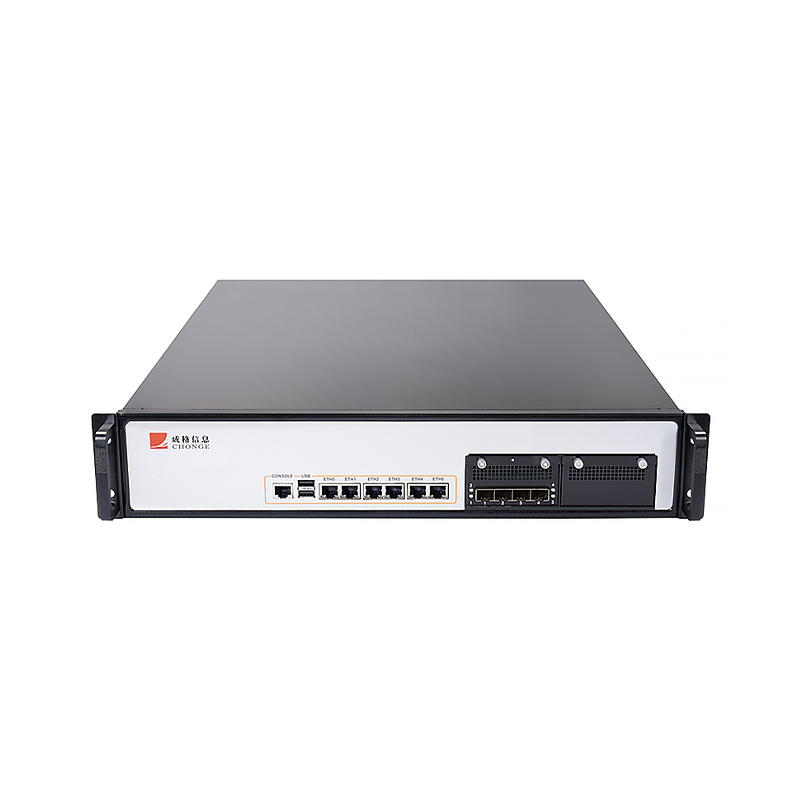
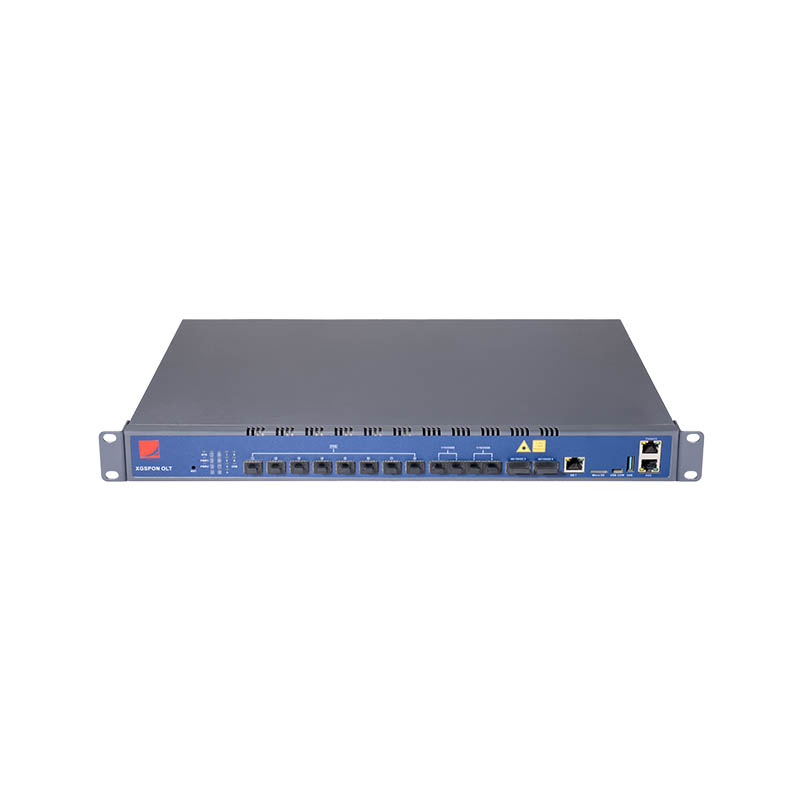
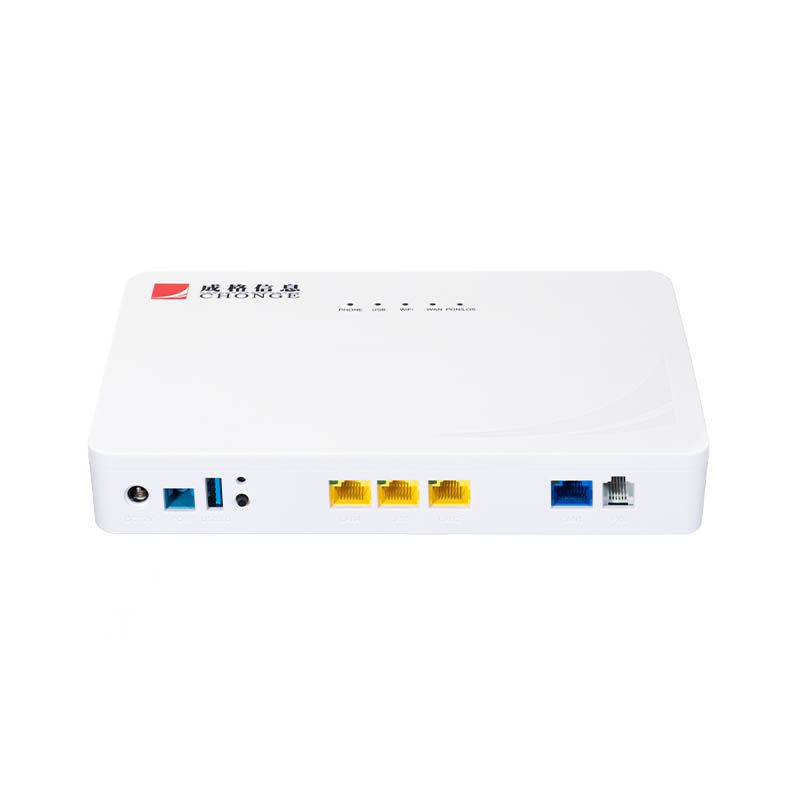
The OLT, as the "brain" of the POL network, is the central hub for this advantage. It converts the data stream from the core network into optical signals, distributes them through a single trunk fiber to multiple passive optical splitters, and then extends them to the optical network units (ONUs) at each user end. The entire downlink and uplink uses optical fiber, with no active electronic devices in between (hence the term "passive"). This not only simplifies the topology but also eliminates potential interference points and fault nodes introduced by repeaters, switches, etc. Even during thunderstorms or power grid fluctuations, optical fiber does not conduct surge currents, significantly improving the system's electrical safety and operational resilience.
Furthermore, the dielectric properties of optical fiber result in lower signal attenuation and higher bandwidth potential. This means that the OLT can maintain high-speed connections over longer distances (several kilometers) without the need for access switches every few hundred meters, as is required with copper cables—the latter not only increases costs but also introduces more potential sources of interference and management complexity. The simplicity of the all-optical link, in turn, further enhances the overall network stability.
More importantly, this stability does not come at the expense of flexibility. Modern OLTs support multi-service convergence; voice, data, video, and IoT signals can be transmitted on the same fiber without interference. Maintenance personnel can remotely monitor the status of each optical link through a unified network management platform, quickly locating breakpoints or degradation points for efficient maintenance.
Ultimately, the secret to the fundamental improvement in data transmission stability by OLT-driven passive optical networks lies in returning to the essence of communication—using light instead of electricity and insulators instead of conductors. It doesn't attempt to "resist" electromagnetic interference, but rather directly "stands outside" it, creating a quiet information highway amidst the noisy electrical world. When vital monitoring data from hospitals, control commands from factories, and 4K live broadcasts from classrooms silently race through optical fibers, that consistent smoothness and reliability is the most powerful interpretation of "stability" by all-optical networks.
Electromagnetic interference is ubiquitous: the starting and stopping of elevator motors, the operation of large medical equipment, variable frequency air conditioners, wireless radio frequency signals, and even nearby power cables all generate varying electromagnetic fields in space. Copper cables, as metallic conductors, are essentially "antennas"—they not only transmit electrical signals but also passively receive these external electromagnetic noises. When interference signals are superimposed on useful data, it can lead to anything from increased bit error rate and network speed fluctuations to connection interruptions or device restarts. In scenarios with extremely high network stability requirements (such as remote consultations in operating rooms, industrial control, and high-definition video surveillance), this uncertainty is unacceptable.
Fiber optics, however, operates on a completely different principle. It uses light pulses, not electrical current, as its information carrier, transmitting data via total internal reflection through a high-purity glass or plastic fiber core. Since the light signal itself is not charged, and fiber optic materials are excellent insulators, it is completely unaffected by external electromagnetic fields. Whether near high-voltage power distribution rooms, MRI equipment, or densely wired low-voltage wells, fiber optics maintain signal purity, achieving "what you receive is what you get." This inherent anti-interference capability allows POL networks to provide a consistently high bandwidth and low latency experience even in complex electromagnetic environments.
The OLT, as the "brain" of the POL network, is the central hub for this advantage. It converts the data stream from the core network into optical signals, distributes them through a single trunk fiber to multiple passive optical splitters, and then extends them to the optical network units (ONUs) at each user end. The entire downlink and uplink uses optical fiber, with no active electronic devices in between (hence the term "passive"). This not only simplifies the topology but also eliminates potential interference points and fault nodes introduced by repeaters, switches, etc. Even during thunderstorms or power grid fluctuations, optical fiber does not conduct surge currents, significantly improving the system's electrical safety and operational resilience.
Furthermore, the dielectric properties of optical fiber result in lower signal attenuation and higher bandwidth potential. This means that the OLT can maintain high-speed connections over longer distances (several kilometers) without the need for access switches every few hundred meters, as is required with copper cables—the latter not only increases costs but also introduces more potential sources of interference and management complexity. The simplicity of the all-optical link, in turn, further enhances the overall network stability.
More importantly, this stability does not come at the expense of flexibility. Modern OLTs support multi-service convergence; voice, data, video, and IoT signals can be transmitted on the same fiber without interference. Maintenance personnel can remotely monitor the status of each optical link through a unified network management platform, quickly locating breakpoints or degradation points for efficient maintenance.
Ultimately, the secret to the fundamental improvement in data transmission stability by OLT-driven passive optical networks lies in returning to the essence of communication—using light instead of electricity and insulators instead of conductors. It doesn't attempt to "resist" electromagnetic interference, but rather directly "stands outside" it, creating a quiet information highway amidst the noisy electrical world. When vital monitoring data from hospitals, control commands from factories, and 4K live broadcasts from classrooms silently race through optical fibers, that consistent smoothness and reliability is the most powerful interpretation of "stability" by all-optical networks.