


Can OLTs Become the Invisible Hub for Efficient Connectivity in Smart Campuses?
Release Time : 2026-02-27
In today's digital age, sweeping through education, hospitality, and enterprise operations, high-speed, stable, and scalable network infrastructure has become the "nervous system" of smart campuses, smart hotels, and modern office environments. The OLT (Optical Line Terminal)—as the core central office equipment in the Passive Optical Network (PON) architecture—is quietly building a high-bandwidth, low-latency, and easily managed all-optical network foundation in scenarios such as Fiber to the Room (FTTR) and Fiber to the Desktop (FTTD) by supporting multiple optical access technologies such as GPON, XG-PON, and even XGS-PON, and offering flexible deployment capabilities in both box-type and rack-mount configurations. Unseen at the user terminal, it becomes the invisible hub for efficient connectivity in smart spaces through precise optical signal scheduling.
Its core value is primarily reflected in its powerful support for multi-service convergence. Whether it's thousands of faculty and students simultaneously engaging in online teaching and research on campus, hotel rooms integrating high-definition video-on-demand with intelligent guest room control systems, or concurrent access for video conferencing, cloud desktops, and IoT terminals in enterprise offices, the OLT can distribute gigabit or even 10-gigabit bandwidth down a single fiber, meeting the unified carrying needs of voice, data, video, and IoT devices. The passive splitter structure simplifies building cabling, reduces space occupation in low-voltage shafts, and avoids electromagnetic interference, ensuring signal purity.
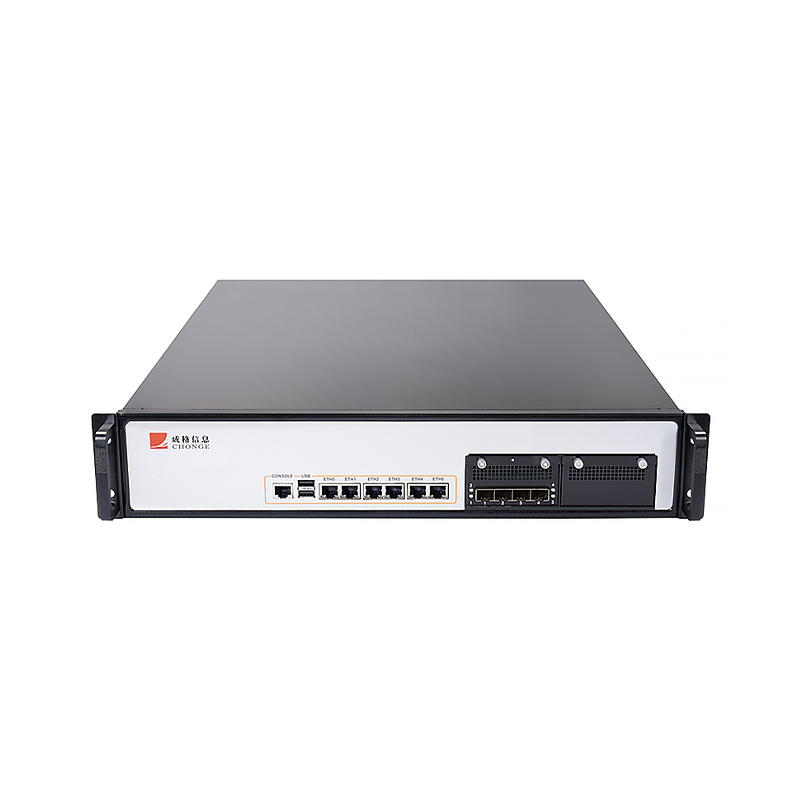
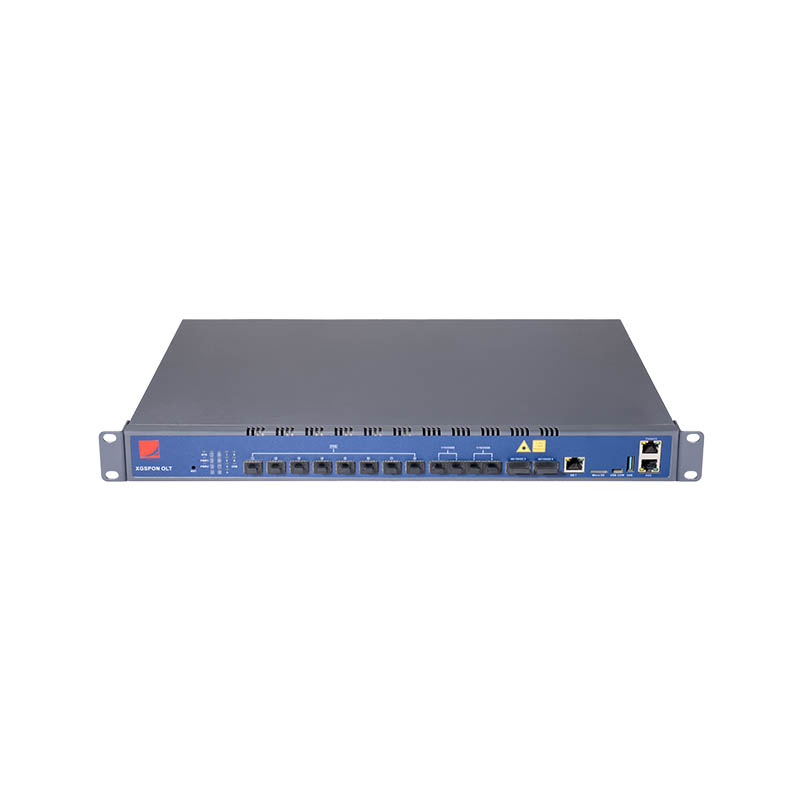
In terms of deployment flexibility, both box-type and rack-mount products are suitable for different scale scenarios. Small campuses, boutique hotels, or branch offices can choose compact box-type OLTs, which are plug-and-play and save server room space; large headquarters, comprehensive universities, or chain hotel groups can deploy high-density rack-mount equipment, supporting redundant power supplies, primary/backup switching, and centralized network management to ensure the continuity of critical business operations. This "selection on demand" strategy allows customers to control initial investment while reserving ample space for future expansion.
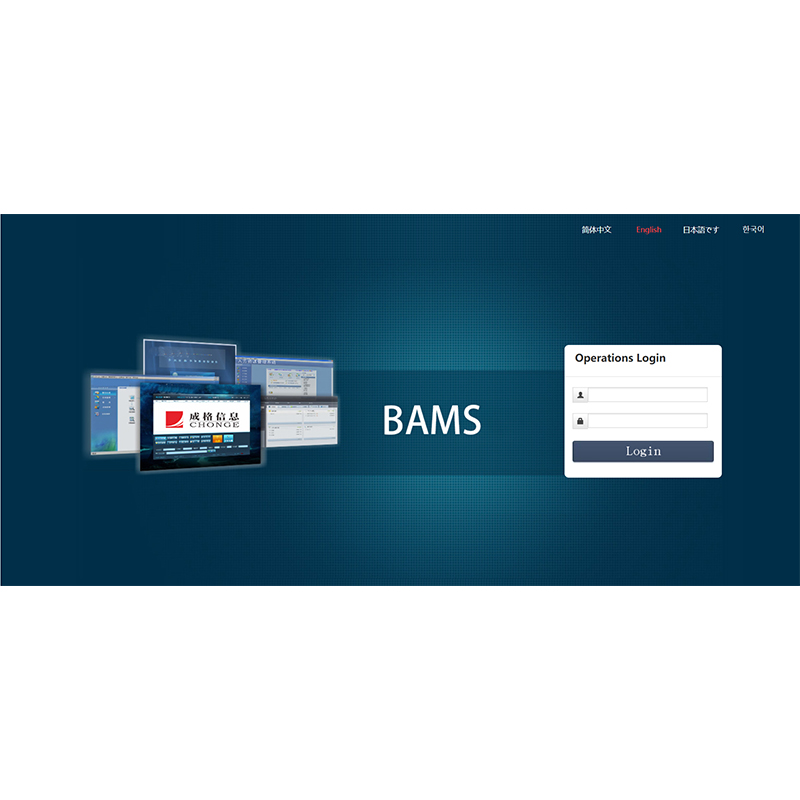
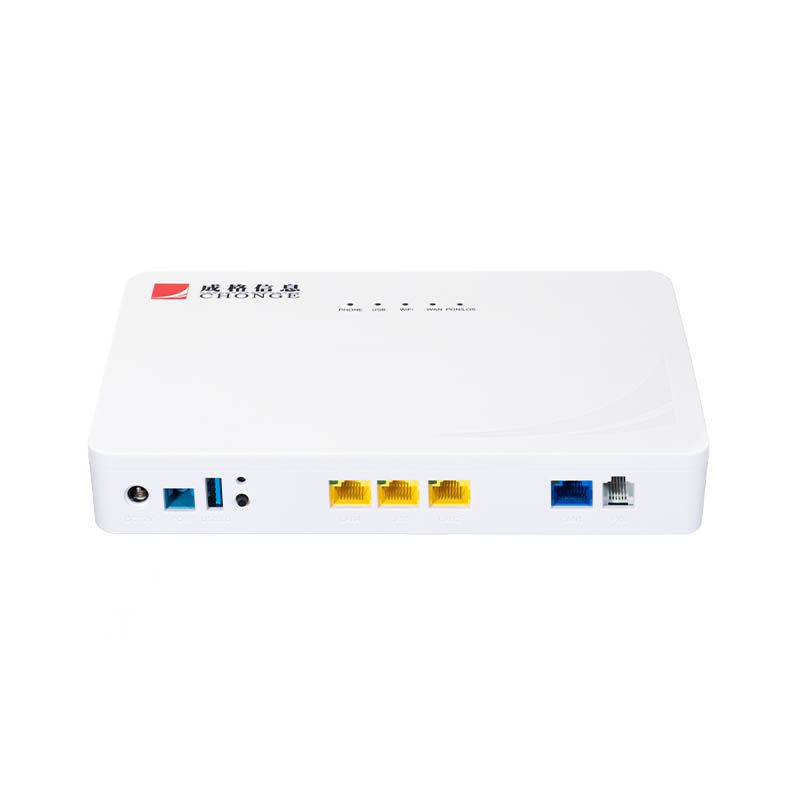
A deeper advantage lies in the systematic empowerment of the all-optical local area network (POL) solution. A professional team can customize end-to-end networking solutions based on building layout, user density, and service type, from OLT selection and splitting ratio design to ONU terminal deployment. A single fiber runs from the equipment room to the rooms, replacing the complex star topology of traditional copper cables, significantly reducing cabling costs and potential failure points. A unified platform manages all optical network units, enabling remote configuration, fault location, and dynamic bandwidth adjustment. Maintenance personnel can quickly respond to network problems without having to troubleshoot layer by layer, improving service efficiency.
Furthermore, future-proof evolution capabilities ensure long-term investment value. The OLT platform supports smooth upgrades to XGS-PON, increasing downlink speeds tenfold without replacing the fiber optic infrastructure, easily handling the bandwidth demands of emerging applications such as 8K video, VR teaching, and AIoT. Green and energy-efficient design also reduces equipment power consumption and heat dissipation requirements, aligning with the trend of low-carbon operation. In an era pursuing both intelligence and sustainability, this "one-time network construction, ten years of worry-free service" architecture is becoming the preferred choice for high-standard digital infrastructure.
Ultimately, the significance of an OLT lies not in the amount of optical signals it processes, but in how it makes connectivity simple, reliable, and future-proof. When students seamlessly access virtual labs, when residents control smart home devices with a single click—behind this is this silent device, using light as a medium to weave an efficient, agile, and resilient digital neural network. Because in the essence of smart spaces, true intelligence is not about terminal technology, but about ensuring every piece of information arrives unimpeded—silent as an OLT, yet possessing the power of light itself.
Its core value is primarily reflected in its powerful support for multi-service convergence. Whether it's thousands of faculty and students simultaneously engaging in online teaching and research on campus, hotel rooms integrating high-definition video-on-demand with intelligent guest room control systems, or concurrent access for video conferencing, cloud desktops, and IoT terminals in enterprise offices, the OLT can distribute gigabit or even 10-gigabit bandwidth down a single fiber, meeting the unified carrying needs of voice, data, video, and IoT devices. The passive splitter structure simplifies building cabling, reduces space occupation in low-voltage shafts, and avoids electromagnetic interference, ensuring signal purity.
In terms of deployment flexibility, both box-type and rack-mount products are suitable for different scale scenarios. Small campuses, boutique hotels, or branch offices can choose compact box-type OLTs, which are plug-and-play and save server room space; large headquarters, comprehensive universities, or chain hotel groups can deploy high-density rack-mount equipment, supporting redundant power supplies, primary/backup switching, and centralized network management to ensure the continuity of critical business operations. This "selection on demand" strategy allows customers to control initial investment while reserving ample space for future expansion.
A deeper advantage lies in the systematic empowerment of the all-optical local area network (POL) solution. A professional team can customize end-to-end networking solutions based on building layout, user density, and service type, from OLT selection and splitting ratio design to ONU terminal deployment. A single fiber runs from the equipment room to the rooms, replacing the complex star topology of traditional copper cables, significantly reducing cabling costs and potential failure points. A unified platform manages all optical network units, enabling remote configuration, fault location, and dynamic bandwidth adjustment. Maintenance personnel can quickly respond to network problems without having to troubleshoot layer by layer, improving service efficiency.
Furthermore, future-proof evolution capabilities ensure long-term investment value. The OLT platform supports smooth upgrades to XGS-PON, increasing downlink speeds tenfold without replacing the fiber optic infrastructure, easily handling the bandwidth demands of emerging applications such as 8K video, VR teaching, and AIoT. Green and energy-efficient design also reduces equipment power consumption and heat dissipation requirements, aligning with the trend of low-carbon operation. In an era pursuing both intelligence and sustainability, this "one-time network construction, ten years of worry-free service" architecture is becoming the preferred choice for high-standard digital infrastructure.
Ultimately, the significance of an OLT lies not in the amount of optical signals it processes, but in how it makes connectivity simple, reliable, and future-proof. When students seamlessly access virtual labs, when residents control smart home devices with a single click—behind this is this silent device, using light as a medium to weave an efficient, agile, and resilient digital neural network. Because in the essence of smart spaces, true intelligence is not about terminal technology, but about ensuring every piece of information arrives unimpeded—silent as an OLT, yet possessing the power of light itself.